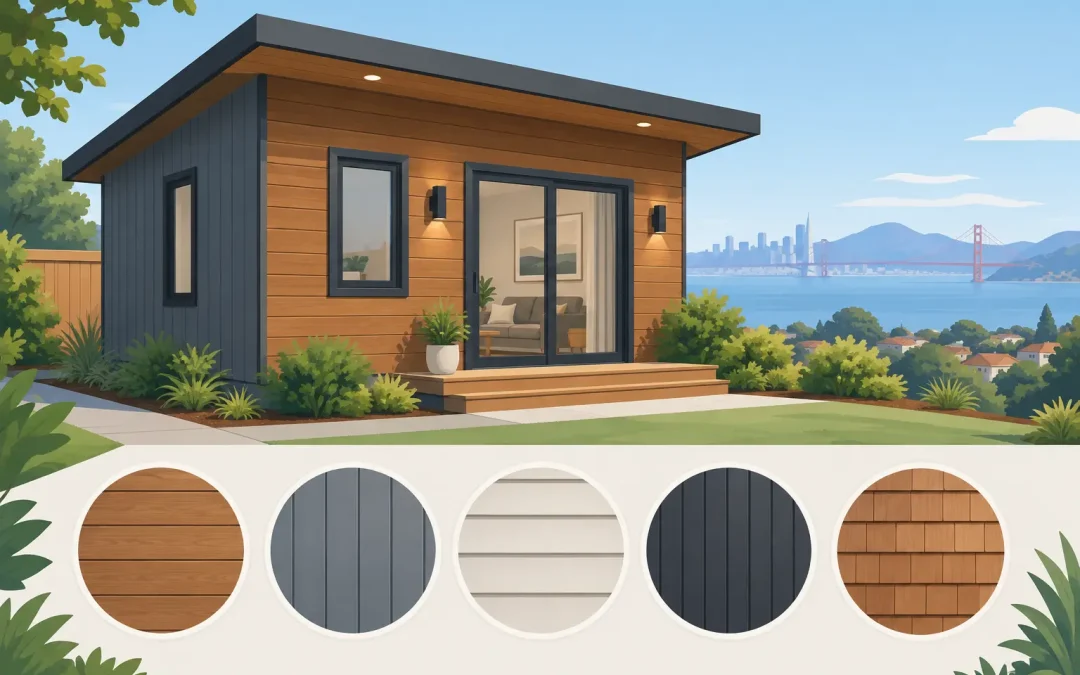
An ADU exterior has to do more than look good on move-in day. It must stand up to fog, sun, rain, salt air in coastal neighborhoods, and the temperature swings found farther inland. The best ADU exterior cladding is the material that fits your home’s architecture, maintenance expectations, local fire considerations, and construction budget – while being detailed correctly from the start.
For Bay Area homeowners, that last part matters as much as the material itself. A beautiful siding product can still fail if the wall assembly lacks proper flashing, drainage, ventilation, and transitions around windows and doors. The right design-and-build team helps make those decisions early, before they become costly changes in the field.
What Makes ADU Cladding a Smart Long-Term Choice?
Cladding is the finished protective layer on the outside of an ADU. It influences curb appeal, but it also helps manage moisture, resist impact, protect the wall structure, and support the building’s energy performance. Since many ADUs sit near an existing home, the exterior material also determines whether the new unit feels thoughtfully connected to the property or added as an afterthought.
The best choice is rarely just the least expensive material per square foot. A lower initial price can be offset by frequent repainting, repairs, or a shorter service life. On the other hand, a premium material may not make sense on every accessory dwelling unit, especially when the goal is to create a durable rental unit with a disciplined overall budget.
We evaluate cladding alongside the ADU’s location, orientation, roof design, setback constraints, and architectural style. A detached backyard cottage in San Jose faces different conditions than a compact Oakland garage conversion or a coastal ADU in San Francisco.
Best ADU Exterior Cladding Materials to Consider
Fiber Cement: The Versatile Bay Area Favorite
Fiber cement is often one of the strongest all-around choices for ADU construction. Available in lap siding, vertical panels, shingles, and smooth contemporary boards, it can suit Craftsman, traditional, farmhouse, and modern designs. It holds paint well, resists rot and insects, and generally requires less upkeep than natural wood.
For homeowners who want a crisp, high-end exterior without committing to intensive maintenance, fiber cement provides a practical balance. It is also noncombustible, which can be a meaningful benefit in areas where wildfire exposure and local requirements shape material decisions.
The trade-off is installation precision. Fiber cement is heavy, requires correct clearances and flashing details, and can crack if handled or fastened improperly. It is not a material to treat as a quick cosmetic upgrade. Proper installation protects its durability and preserves the clean lines that make it so popular.
Stucco: A Natural Fit for Contemporary and Mediterranean Homes
Stucco remains a classic choice throughout the Bay Area, especially for Spanish, Mediterranean, and streamlined contemporary homes. It can create a cohesive connection when an ADU is built near a stucco main residence. Its continuous appearance also works well on smaller buildings, where too many horizontal lines can make the structure feel busy.
A high-quality stucco system can be durable and attractive for decades. Color can be integrated into the finish coat, reducing the need for frequent repainting, and the material offers a substantial, refined look that suits many custom ADU designs.
Still, stucco is only as dependable as the water-management system behind it. Flashing, weep screeds, drainage planes, and penetrations must be managed carefully. Cracks can happen over time, particularly where structural movement occurs, and they should be addressed promptly so moisture does not reach the wall assembly. Stucco is an excellent option when the design and installation details are handled with care.
Natural Wood: Warmth That Needs Commitment
Nothing quite matches real wood for warmth and texture. Cedar, redwood, and thermally modified wood can give a backyard ADU a distinctive architectural presence, whether used across the full exterior or as an accent at an entry, covered patio, or upper story.
Wood is especially effective when homeowners want the ADU to feel like a small custom home rather than a secondary structure. It pairs beautifully with large windows, simple rooflines, and modern landscaping. In a well-designed composition, wood can soften contemporary forms and make a compact unit feel more welcoming.
Its trade-off is maintenance. Sun exposure, moisture, and weathering can change the appearance of wood quickly, particularly on south- and west-facing walls. Clear finishes and stains require periodic renewal, and paint needs ongoing attention. In wildfire-prone locations, product selection and local code requirements also need early review. Wood can be the right choice, but it should be selected with a realistic maintenance plan, not just for its first-year appearance.
Metal Panels: Clean Lines and Exceptional Durability
Metal cladding has become a compelling option for modern ADUs. Vertical metal panels, corrugated profiles, and standing-seam-inspired systems can create a precise, low-maintenance exterior that feels current without becoming overly flashy. Metal is particularly effective for detached ADUs with simple forms and restrained material palettes.
Quality metal panels resist insects, rot, and much of the weather-related deterioration that affects organic materials. They can also work well as accents alongside fiber cement or stucco, creating depth around an entry or projecting volume.
The design needs to account for the material’s visual character. Large metal surfaces can feel industrial if the color, panel profile, and trim details are not carefully chosen. Some systems can also amplify rain noise if used in certain roof or wall applications. Thoughtful insulation, backing, and installation details help avoid that concern.
Mixing Materials Can Make a Small ADU Feel More Custom
An ADU does not have to use one cladding material from foundation to roofline. In fact, a controlled mix often produces a more polished result. Fiber cement siding with wood at the recessed entry, or smooth stucco with a metal accent volume, can give the building dimension without unnecessary complexity.
The key word is controlled. Every material transition adds flashing requirements, trim decisions, and labor. Too many competing finishes can make a compact ADU feel visually fragmented and increase construction costs. A simple two-material palette is often enough to establish hierarchy: a durable primary cladding and one warmer or more distinctive accent.
Material choices should also relate to the primary house. They do not need to match exactly. A successful ADU can use a more contemporary interpretation of the main home’s colors, roof geometry, or texture while still looking intentional on the property.
Do Not Overlook Fire, Moisture, and Local Approval Requirements
Bay Area properties can face very different environmental and regulatory conditions within a short distance. Fire hazard severity zones, local planning standards, historic context, and neighborhood design expectations may affect exterior decisions. In some locations, ignition-resistant or noncombustible materials may be strongly preferred or required for portions of the project.
Moisture management deserves equal attention. Rain does not have to be constant to cause damage. Wind-driven rain, morning fog, irrigation overspray, and shaded side yards can all challenge an ADU exterior over time. A drained and ventilated wall assembly, correctly integrated weather-resistive barrier, durable flashing, and well-designed roof overhangs protect the investment behind the visible finish.
Permitting review is another reason to finalize the exterior palette during design rather than after plans are submitted. Changes to materials, colors, or fire-rated assemblies can affect approvals, cost, and scheduling. Resolving those questions early keeps the project moving with fewer surprises.
How to Choose the Right Cladding for Your ADU
Start with the role the ADU will play. A long-term rental unit may favor low-maintenance fiber cement or stucco. A multigenerational suite might justify warmer wood accents and a more residential design statement. An investor building several units may prioritize durable materials that are easy to maintain and replace.
Then consider the property itself. Is the ADU highly visible from the street, tucked behind the main home, exposed to afternoon sun, or located near mature landscaping? Does the existing house have a material palette worth carrying forward? These questions lead to better answers than choosing based on a single sample board.
Finally, compare lifetime value rather than material price alone. Include the expected maintenance cycle, installation complexity, repairability, and how the cladding supports the overall property value. The right exterior should look finished, protect the structure, and remain manageable years after the final walkthrough.
At Good Vibes Design & Build, we help Bay Area homeowners manage every detail of an ADU project, from early design direction and permit coordination to construction and final completion. A free consultation is a practical place to discuss how your exterior vision fits the site, budget, and long-term goals for your property.
Choose an exterior that earns its place on the home: one that complements the architecture, handles the local climate, and lets your ADU feel like a lasting part of the property rather than a compromise in the backyard.