
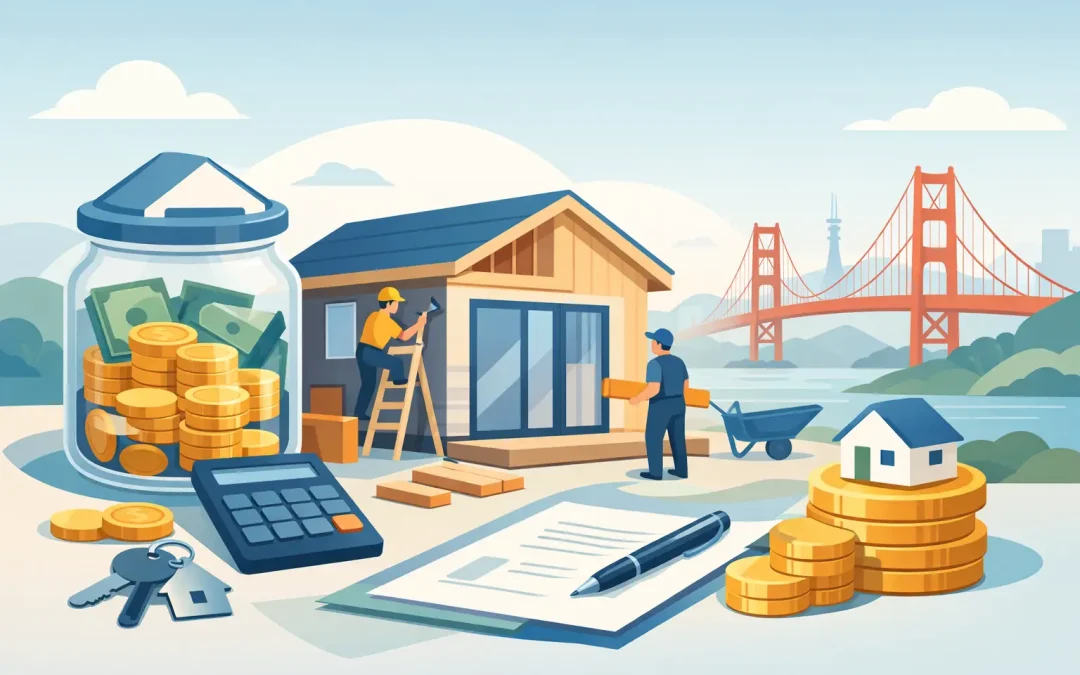
A detached ADU behind a Bay Area home can become a private suite for family, a long-term rental, or the extra space that makes a property work for the next decade. But before plans are drawn, most homeowners ask the same practical question: how to finance ADU construction without putting unnecessary pressure on their household budget.
The right answer depends on your equity, income, timeline, and plans for the completed unit. A homeowner building a suite for aging parents may choose differently than an investor creating a rental. What matters is matching the financing structure to the project before construction begins, then working from a realistic all-in budget that includes design, permits, utilities, construction, and a contingency reserve.
Start With the Complete ADU Budget
Financing a project based only on a contractor’s rough construction number is one of the fastest ways to create stress later. An ADU is a complete dwelling unit, not simply an added room. It may require architectural plans, structural engineering, city fees, utility connections or upgrades, site work, appliances, finishes, and inspections.
In the Bay Area, site conditions can have a meaningful impact on cost. A sloped backyard, limited access for equipment, aging sewer lines, a detached garage conversion, or an electrical service upgrade can change the scope. So can local planning requirements and the level of finish you select.
Ask for a project budget that separates pre-construction, permitting, and building costs. You should also carry a contingency, commonly 10% to 15% depending on the project and how much is known before demolition or excavation. A well-defined scope gives lenders better information and gives you a more useful basis for comparing loan options.
Use Home Equity When You Have It
For many established Bay Area homeowners, home equity is the primary source of ADU funding. Property values may have created substantial equity, even if the existing mortgage rate is lower than rates available today. The key is deciding whether to access that equity without disrupting a favorable first mortgage.
Home equity line of credit
A HELOC gives you a revolving line of credit secured by your home. It can work well when an ADU will be built in phases, since you draw funds as needed rather than borrowing the full amount on day one. During the draw period, payments may be lower because some lenders allow interest-only payments.
The trade-off is that HELOC rates are usually variable. Your payment can rise if interest rates increase, and the line may eventually move into a repayment period with higher monthly payments. Confirm the rate structure, draw period, repayment terms, and any minimum draw requirements before relying on a HELOC for construction.
Home equity loan
A home equity loan provides a lump sum with a fixed interest rate and fixed monthly payment. It can be a good fit when your ADU plans, permit costs, and construction contract are well defined. Predictable payments make household budgeting easier, particularly for homeowners who do not want exposure to a variable rate.
Unlike a HELOC, you pay interest on the entire amount from the start. This option is generally more useful once the project scope is mature and you know the amount you need to borrow.
Cash-out refinance
A cash-out refinance replaces your current mortgage with a larger new loan and provides the difference in cash. It can make sense when the new mortgage rate and terms are competitive, or when consolidating higher-cost debt is part of a broader financial plan.
For many Bay Area homeowners, though, replacing a low-rate first mortgage solely to fund an ADU may not be attractive. Compare the total cost of the new loan, not just the monthly payment. A second-position home equity loan or HELOC may preserve your existing mortgage while still funding the project.
Consider a Construction Loan for a Larger Build
A construction loan is designed for projects where the lender releases funds in stages as work is completed. This structure is most relevant for ground-up detached ADUs, substantial site work, or projects that include an ADU alongside a major home remodel or new construction.
Construction financing typically involves more documentation than a home equity product. The lender may review plans, permits, contractor credentials, a detailed budget, construction schedule, and appraisal information. Funds are released through draws, often after inspections or lender approval.
These loans can offer a clean way to finance a significant project, but they may carry higher rates, fees, and stricter underwriting. Some convert to a permanent mortgage after completion, while others require separate long-term financing. Review how interest is charged during construction and whether interest reserves are included in the loan amount.
Use Rental Income Carefully in Your Planning
An ADU can create meaningful rental income in San Francisco, Oakland, San Jose, Berkeley, and throughout the Bay Area. That income may help support the monthly cost of financing, but it should not be treated as guaranteed from the first day of construction.
Build a conservative rental projection based on the unit’s size, location, parking situation, access, finishes, and local rental market. Account for vacancy, maintenance, insurance changes, property management if applicable, and the time between construction completion and tenant move-in. If you intend to rent the ADU, also understand local rental rules before finalizing your plan.
Lenders vary in whether and how they count projected ADU rent for qualification. An existing legal rental history is treated differently from future income on a unit that has not yet been built. Speak with a lender early rather than assuming anticipated rent will qualify you for a larger loan.
Personal Loans and Cash: Useful, but Usually Secondary
A personal loan may cover a smaller funding gap, design costs, or a limited portion of a garage conversion. Because it is unsecured, approval may be faster than a mortgage-based loan. The drawback is typically a higher interest rate and shorter repayment term, which can create a sizable monthly payment.
Cash avoids interest and lending fees, and it gives homeowners flexibility. Still, committing every available dollar to construction can leave too little reserve for unexpected property repairs, business changes, or scope adjustments. Many homeowners use a combination of savings and home equity financing so they can retain a comfortable emergency fund.
Prepare Before You Apply for ADU Financing
The strongest financing application begins well before the lender sees it. Gather recent mortgage statements, property tax information, proof of income, bank and investment statements, and a clear record of existing debts. Review your credit report and address any errors or balances that could affect your debt-to-income ratio.
Just as important, bring lenders a credible project package. Early sketches and a verbal estimate may be enough for an initial conversation, but construction lending often requires much more. Detailed plans, a permit strategy, contractor bid, scope of work, and anticipated schedule make it easier to evaluate the project.
This is where an integrated design-build process can save time. Rather than coordinating separate designers, permit consultants, and builders while trying to explain the project repeatedly to a lender, homeowners can develop a coordinated set of plans, budget information, and construction expectations from the start.
Compare Financing Offers Beyond the Interest Rate
The lowest advertised rate is not always the least expensive or most practical choice. Compare the annual percentage rate, closing costs, origination fees, appraisal requirements, prepayment rules, and whether the rate is fixed or variable. Also look at the monthly payment during construction and after the loan converts or the repayment period begins.
Ask each lender how they handle cost increases. If you need to use your contingency, can the loan amount be modified? Will a change order affect the draw schedule? Does the lender require permits before closing, or can financing be secured during design? Direct answers to these questions can prevent an otherwise good loan from becoming a poor fit for your construction timeline.
Build the Financing Plan Around Your Real Goal
An ADU is often a financial project, but it is rarely only a financial project. The best financing plan leaves room for the outcome you actually want: a comfortable home for family, a polished rental that attracts reliable tenants, or a flexible space that adds long-term value to your property.
Before you commit, get a clear project budget and speak with qualified lending and tax professionals about your specific situation. Then bring your plans to a team that can manage every detail from design and permitting through construction and final walkthrough. Good Vibes Design & Build offers free consultations to help Bay Area homeowners turn an ADU idea into a well-planned project with a budget built for the real work ahead.